ArticlesSaudi Arabia
Saudi Arabia's first car runs on a Croatian electric drive
Ceer, Saudi Arabia's first national car brand, launched with a Rimac Technology drive. What it means for European suppliers eyeing the Kingdom.
 Josip GudeljSenior Consultant, MTSI Solutions
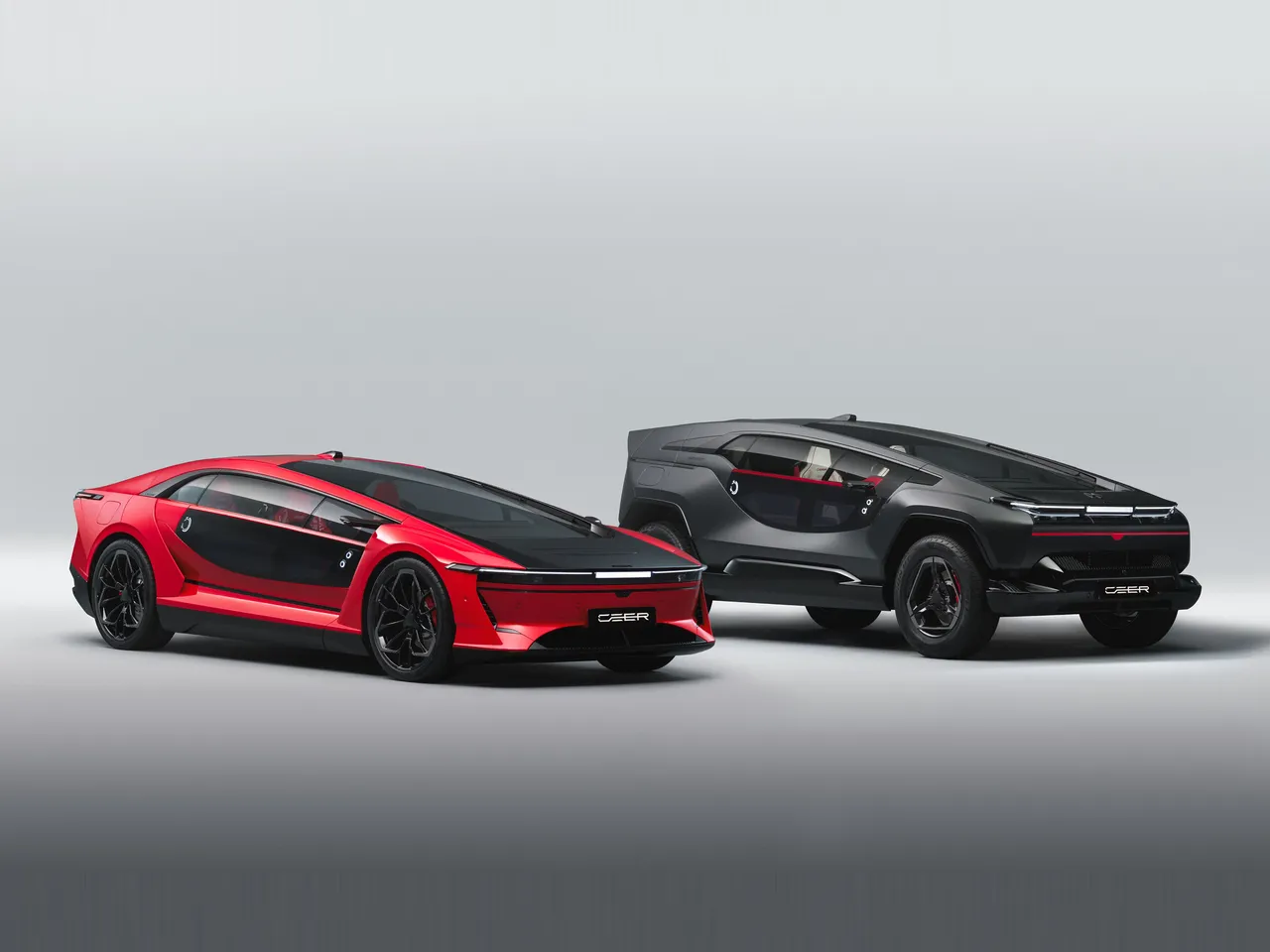
On 21 September 2026 in Riyadh, Crown Prince Mohammed bin Salman unveiled the first two cars from Ceer, Saudi Arabia’s national electric vehicle brand: the EXOBOT sedan and the EXOBOT SUV. Croatian media covered the premiere closely, and for good reason. The rear electric drive units come from Rimac Technology, built in Croatia.
For European industrial companies weighing a move into Saudi Arabia, the launch is more than a car story. It shows how the Kingdom is building a new industry, and where foreign suppliers fit into it.
What was launched
Ceer was founded in 2022 by the Public Investment Fund (PIF) together with Foxconn. Its first two models share a tri-motor, all-wheel-drive layout:
- First Edition: 850 hp, 1,000 Nm, 112 kWh battery, up to 670 km (sedan) and 560 km (SUV) of range on the NEDC cycle, 800V fast charging
- Top versions: up to 1,111 hp and 1,500 Nm, 0 to 100 km/h in 2.1 seconds for the sedan
The cars are built at the Ceer Manufacturing Complex in King Abdullah Economic City. Series production is planned for January 2027, with first customer deliveries in March 2027. Ceer plans seven models by 2030, including mid-size and compact cars. Prices have not been announced.
The engineering was clearly done for the region. Ceer says the climate system cools a cabin from 65°C to 32°C in ten minutes.
Who supplies what
The EXOBOT is a Saudi car assembled from a global supply chain:
- Rimac Technology supplies the rear electric drive system, under a contract signed in October 2024. Croatian reports say the drive units are produced at Rimac’s sites near Zagreb.
- Hyundai Transys supplies the front motors.
- Foxconn provides the platform and electrical architecture.
- BMW licensed technology to Ceer. The exact scope has not been published.
When the Rimac deal was announced, Mate Rimac said that partnerships with the BMW Group and Ceer “will result in the production of tens of thousands of electric drive systems”.
Why the Kingdom is doing this
PIF expects Ceer to add more than SAR 30 billion (USD 8 billion) to Saudi GDP by 2034 and to improve the trade balance by more than SAR 80 billion (USD 21 billion). Ceer’s stated target is 45% local content by 2034.
That last number matters most to suppliers. Today, key components like Rimac’s drive units are made in Europe and shipped in. A 45% local content target means that, over the next eight years, a growing share of parts, materials and sub-assemblies is expected to be made in Saudi Arabia. Ceer has already signed agreements with the Local Content and Government Procurement Authority to support that.
Ceer is not the only project. Lucid already assembles vehicles in King Abdullah Economic City, and a joint venture between PIF and Hyundai is building a plant for 50,000 vehicles a year in the city’s King Salman Automotive Cluster. Together they point to an automotive cluster forming on the Red Sea coast.
What this means for European suppliers
The Rimac story shows the typical sequence. A European company with a technology the programme can’t source locally wins a supply contract and delivers from home. Over time, the customer’s local content targets create pressure, and opportunity, to move part of the value chain into the Kingdom.
For a European automotive or industrial supplier, the questions to answer early are:
- Can you win the first contract from Europe? Saudi programmes buy proven technology. A reference with a European OEM carries weight.
- What would you localise, and when? In our view, assembly, testing, battery packs, wiring harnesses, castings, plastic parts and aftermarket service are natural first steps.
- Where would you set up? King Abdullah Economic City hosts the Ceer, Lucid and Hyundai plants and is one of Saudi Arabia’s Special Economic Zones. Companies in the zone can benefit from corporate income tax reduced to 5% for up to 20 years, deferred customs duties and 0% withholding tax on profits sent abroad.
- How will you finance it? A new industrial plant in Saudi Arabia can apply for Saudi industrial financing and incentives, such as loans from the Saudi Industrial Development Fund (SIDF).
Saudi Arabia is still a small car market by European standards, with just over 800,000 new cars registered in 2025 and about 3% of them electric. The opportunity is less about local car sales and more about joining an industrial base the state is determined to build, with long-term offtake and incentives behind it.
How MTSI helps
MTSI helps European industrial companies assess and execute a move into Saudi Arabia: the investment case, the choice of location, company setup, and applications for incentives and financing. If your company supplies the automotive industry and you are looking at Ceer, Lucid, Hyundai or the wider Saudi supply chain, talk to us.